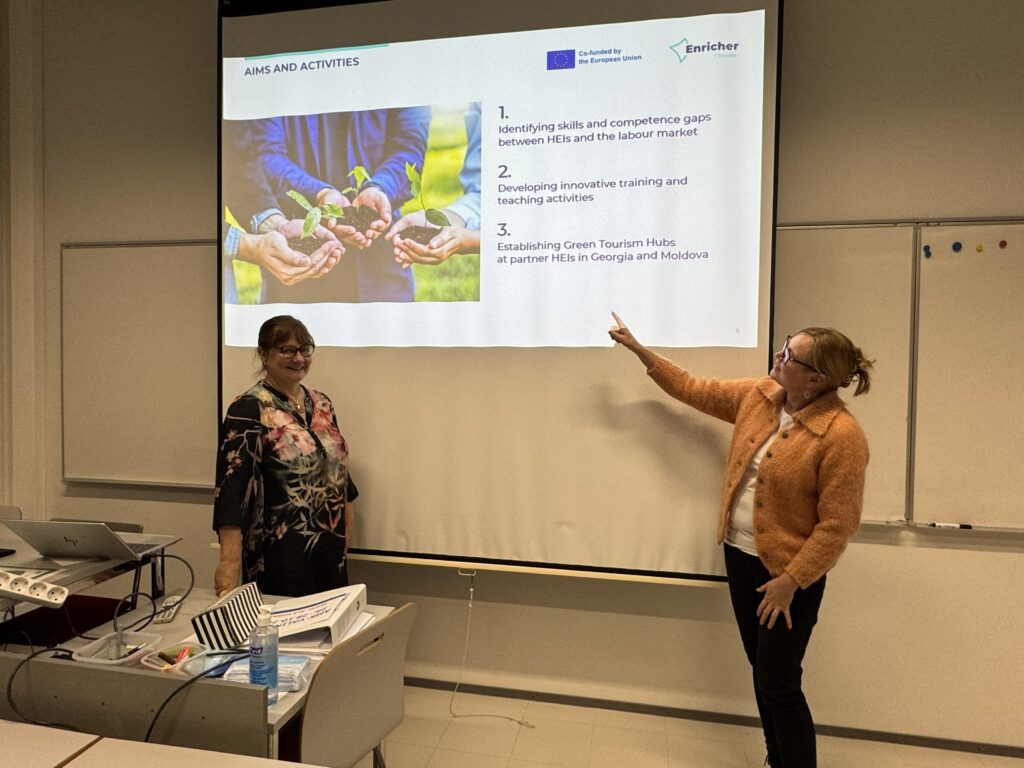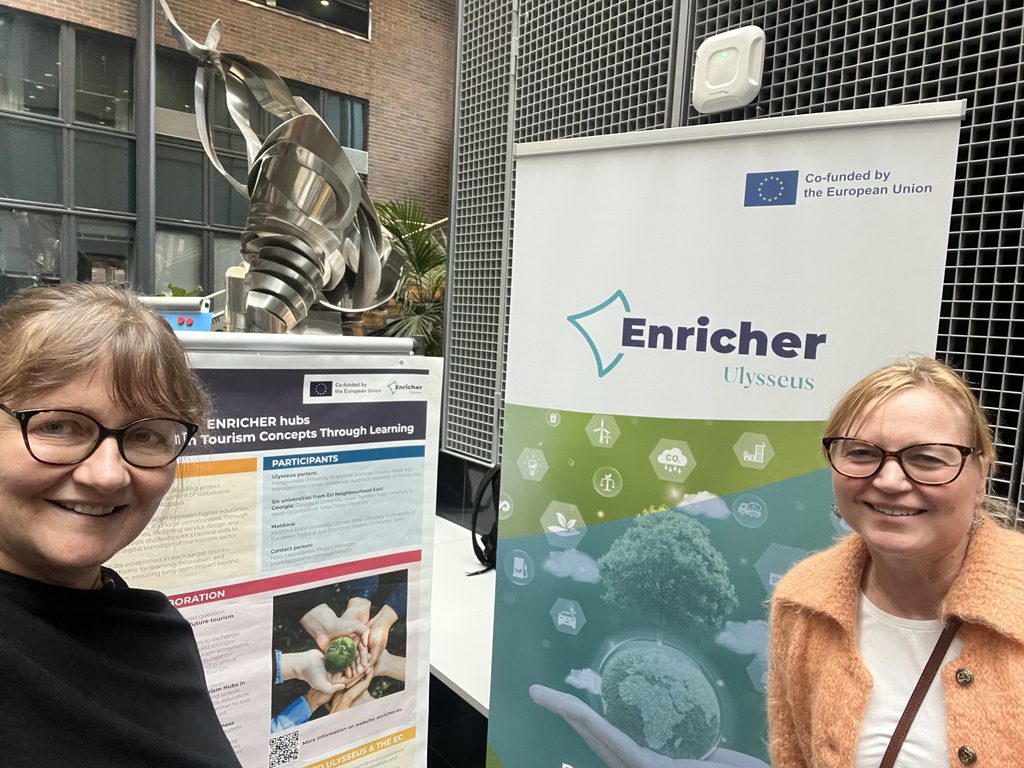
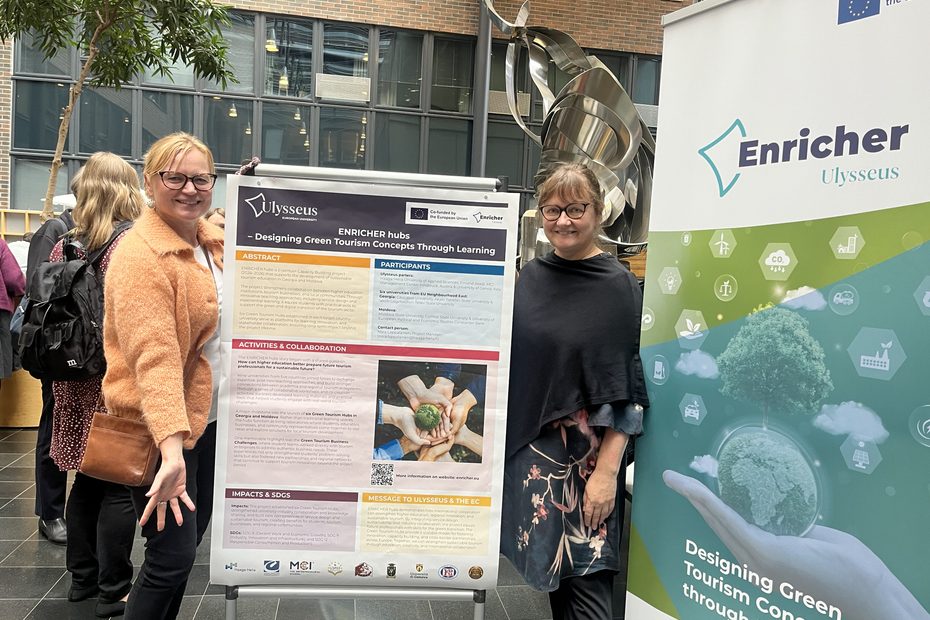
The ENRICHER hubs project’s sustainability plan and exploitation strategy were featured at Haaga-Helia Research Day on 23 October 2026. The presentation was delivered by project manager Nora Lappalainen and senior lecturer Annika Konttinen.
This year’s Research Day theme, “Power of Networks”, provided an ideal setting for discussing how international collaboration and stakeholder engagement can help project outcomes endure beyond the lifespan of funded initiatives. The ENRICHER hubs project opened the first session of the day with a presentation titled Beyond the Project: Planning for Sustainability and Exploitation in Erasmus+ Capacity Building Projects.
The presentation explored how the Erasmus+ Capacity Building project is preparing for long-term impact after project funding comes to an end. A key focus was the distinction between two central Erasmus+ concepts: sustainability and exploitation.
In Erasmus+ projects, sustainability refers to ensuring that project activities, results and resources continue after the funding period has ended. This includes maintaining and further developing project outcomes, securing resources, and embedding activities within institutional structures. Exploitation, on the other hand, focuses on ensuring that project outputs, tools, learning materials and networks continue to be actively used by their intended target groups, thereby maximising the project’s long-term impact.
A central objective of the ENRICHER hubs project is to ensure that the six Green Tourism Hubs established at partner universities in Georgia and Moldova evolve from temporary project initiatives into permanent university-supported innovation ecosystems. To achieve this, the hubs require clear governance structures, sustainable resources, measurable impact indicators and strong stakeholder engagement.
The presentation also shared several important lessons learned from the sustainability planning process. First, sustainability planning should begin early, as developing viable long-term solutions requires time, reflection and multiple iterations. Second, broad collaboration is essential because involving all partners strengthens commitment and ownership. Third, building a shared understanding across institutions, countries and cultures requires continuous dialogue and active engagement throughout the project lifecycle.
The central message was clear: sustainability and exploitation should not be treated as end-of-project activities but should be planned from the very beginning. The ENRICHER hubs project demonstrates how universities can transform a funded Erasmus+ initiative into a lasting ecosystem that supports sustainable tourism education, innovation, stakeholder collaboration and future international cooperation.
Both the sustainability plan and the exploitation strategy of the project are now available on the project website.