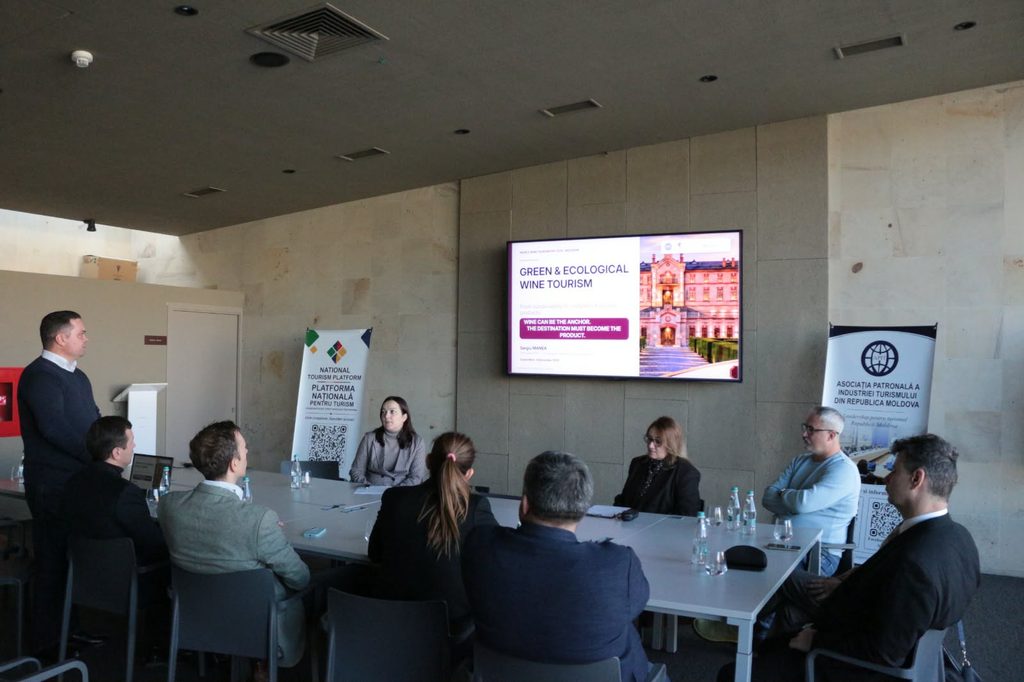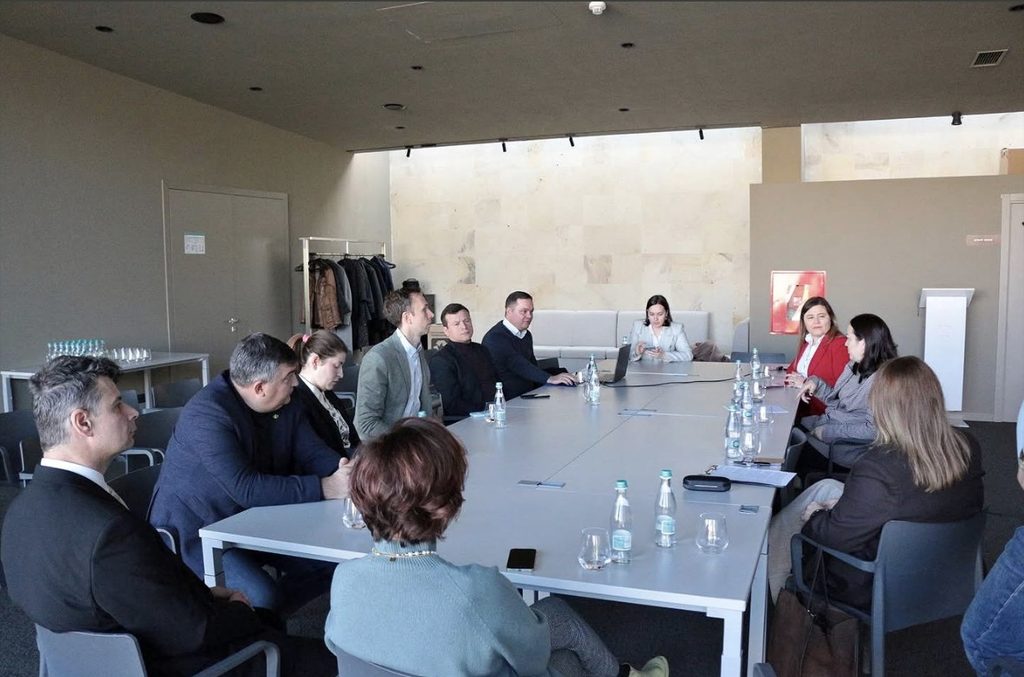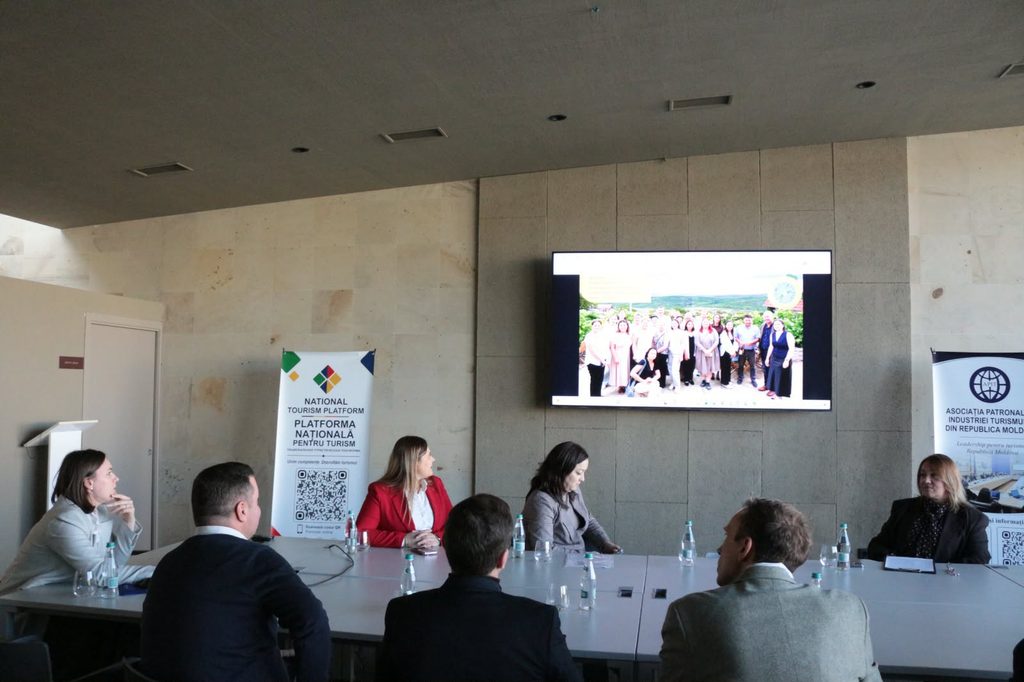
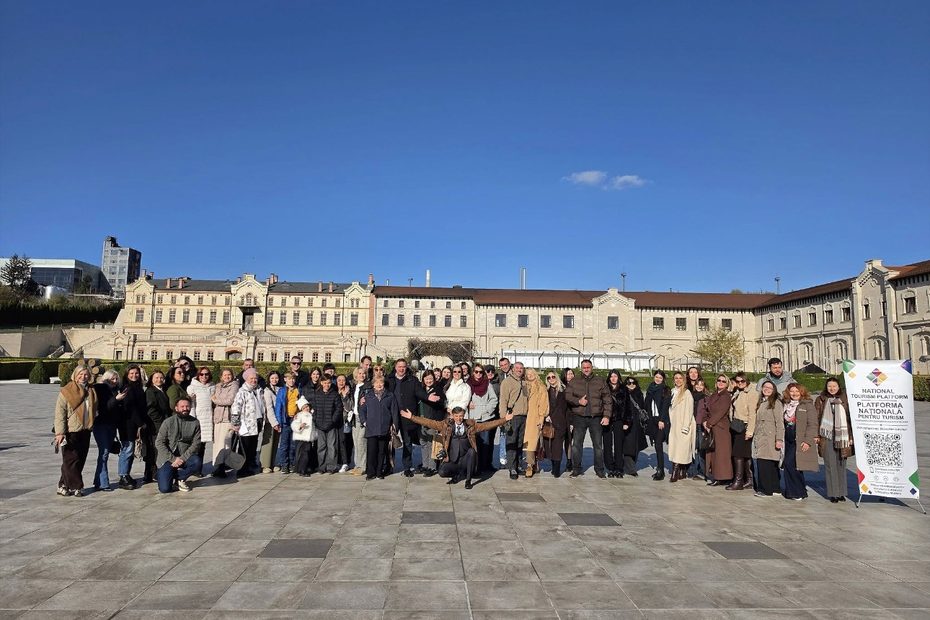
On November 8, 2026, Doctor Habilitat, Professor Alla Levitskaia, participated in the roundtable discussion “Green and Ecological Wine Tourism: From Sustainable Development to Competitive Tourism Products,” which took place at Castel Mimi as part of World Wine Tourism Day. The discussion was organized by the Association of the Tourism Industry of the Republic of Moldova (APIT) and the National Tourism Platform (PNT).
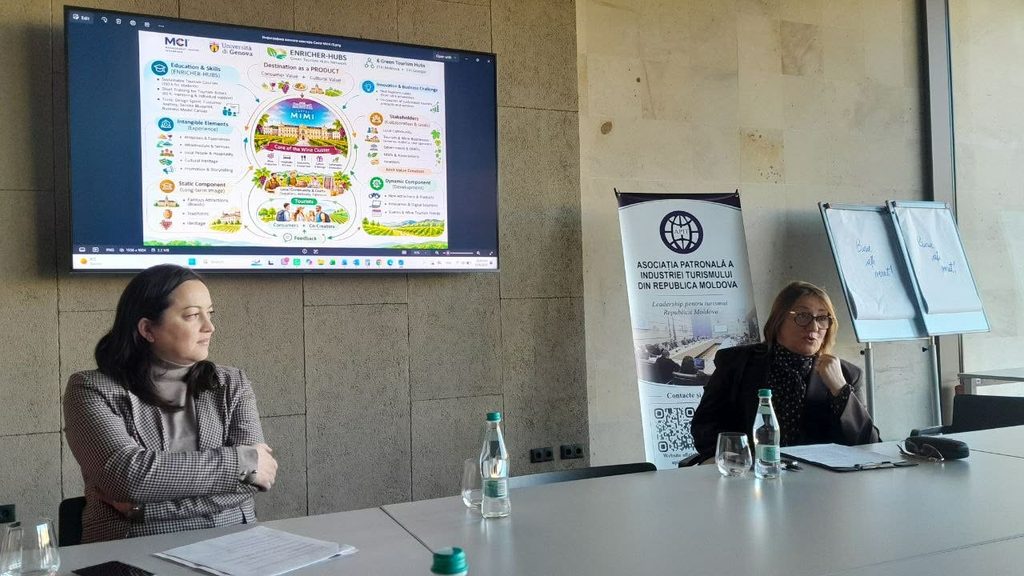
Representing Comrat State University and the Green Tourism Hub, Prof. Alla Levitskaia delivered a presentation entitled “Green Tourism through Innovation, Competency Development, and University-Business Cooperation. The Experience of the ENRICHER Hub Project.”
The presentation focused on the ENRICHER hubs project’s experience in developing sustainable tourism and strengthening the interaction between education and the tourism industry. Particular attention was paid to the role of the Green Tourism Hub as a platform for training, knowledge sharing, and the joint development of tourism products.
The presentation focused on the experience of implementing the international ENRICHER hubs project at Comrat State University, which aims to develop sustainable tourism, introduce innovative educational approaches, and strengthen collaboration between higher education and the tourism industry. Particular attention was paid to the activities of the university’s Green Tourism Hub, created as an educational and practice-oriented platform for developing new approaches to sustainable tourism development.
The presentation reviewed events organized by the ENRICHER Project’ team in the Hub, including thematic meetings, training seminars, workshops, presentations of successful practices, and discussions involving faculty, students, experts, and representatives of the tourism industry. It was emphasized that such events allow for the integration of academic knowledge with the real needs of the tourism industry and the exchange of successful practices in tourism.
Special attention in Professor A. Levitskaia’s presentation was devoted to the implementation of the educational curriculum developed as part of the project into the university’s student training program—future specialists in the tourism industry. It was noted that integrating sustainable tourism into the educational process helps develop competencies in the fields of environmentally responsible tourism resource management, sustainable tourism product development, tourism service organization, and the application of modern approaches to tourism development. The practical focus of the training is particularly important, allowing students to apply their acquired knowledge to address specific challenges in the tourism industry.
It was also noted that Comrat University’ Green Tourism Hub is becoming an important link between the university, students, the expert community, and the tourism industry, facilitating partnerships, disseminating sustainable tourism principles, and fostering an innovative educational environment.
The roundtable brought together representatives of government agencies, the diplomatic corps, wineries, the tourism industry, and the academic community. The discussion focused on creating integrated tourism offerings that link wine culture, gastronomy, local heritage, and hospitality.
Participation in the roundtable “Green and Ecological Wine Tourism: From Sustainable Development to Competitive Tourism Products,” was a good opportunity to share successful experience of implementing the ENRICHER project at the Comrat State University and the practical significance of the project’s results for the university environment and business.